Skip to content
    • info@hktsoft.net
  • Connecting and sharing with us
  • -
  • About us
    • info@hktsoft.net
HKT ConsultantHKT Consultant
  • Management Theories
    • Industrial Organization
      • Competitive Advantage Theory
      • Contingency Theory
      • Institutional Theory
      • Evolutionary Theory of the Firm
      • Theory of Organizational Ecology
      • Behavioral Theory of the Firm
      • Resource Dependence Theory
      • Invisible Hand Theory
    • Managerial Approaches
      • Agency Theory
      • Decision Theory
      • Theory of Organizational Structure
      • Theory of Organizational Power
      • Property Rights Theory
      • The Visible Hand
    • Hypercompetitive Approaches
      • Resource-Based Theory
      • Organizational Learning Theory
      • Transaction Cost Economics
      • Hypercompetition
      • Systems Theory
  • Economic Theories
  • Social Theories
  • Political Theories
  • Philosophies
  • Theology
  • Art Movements
Alasdair A. K. White

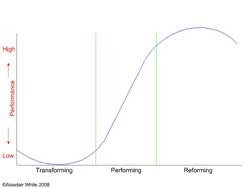
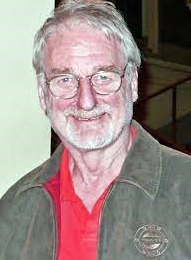
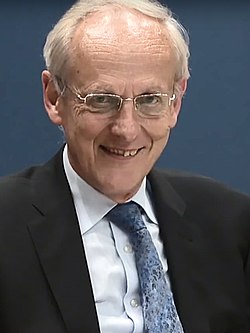
Alasdair Antony Kenneth White (born May 24, 1952) is a British management theorist best known for his work on performance management from a behavioural perspective and in the field of deconcentrated and networked organizations. Along with John Fairhurst, White developed the White-Fairhurst Performance Hypothesis relating to the performance life-cycle. He is also the author of Continuous Quality Improvement and The

18
Jul
John Whitmore

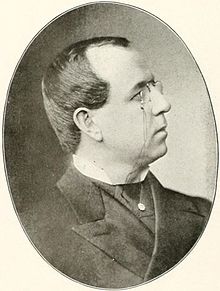
John Whitmore (c. 1870 – March 18, 1937[1]) was an American accountant, lecturer, and disciple of Alexander Hamilton Church, known for presenting “the first detailed description of a standard cost system.”[2] Biography Whitmore had obtained his licence as Certified Public Accountant in the State of New York. He joined the firm of Patterson, Teele & Dennis where he eventually became, and

18
Jul
Eli Whitney

Eli Whitney Jr. (December 8, 1765 – January 8, 1825) was an American inventor, widely known for inventing the cotton gin, one of the key inventions of the Industrial Revolution that shaped the economy of the Antebellum South.[1] Although Whitney himself believed that his invention would reduce the demand for enslaved labor and help hasten the end of southern slavery,

18
Jul
Jennifer Wilby

Jennifer M. Wilby (born 1953) is an American and UK management scientist, and past director of the Centre for Systems Studies, and a senior lecturer and researcher in management systems and sciences in The Business School, University of Hull. She served as president of the International Society for the Systems Sciences for the term 2010–2011. Biography Jennifer Wilby received

18
Jul
Oliver E. Williamson

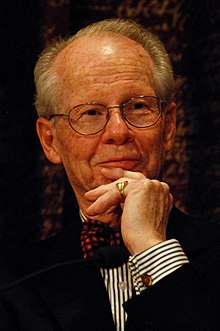
Oliver Eaton Williamson (September 27, 1932 – May 21, 2020) was an American economist, a professor at the University of California, Berkeley, and recipient of the 2009 Nobel Memorial Prize in Economic Sciences, which he shared with Elinor Ostrom.[1] His contributions to transaction cost economics and the theory of the firm have been influential in the social sciences,[2][3][4] law and economics. Williamson described his work

18
Jul
Mark W. Willis

Mark Willis is an American business executive and stock holder at Keller Williams Realty, an international real estate franchise with headquarters in Austin, Texas.[1][2][3] Willis was President of Keller Williams Realty prior to 2005 when he took over the position as chief executive officer (CEO).[4] In 2015, Chris Heller succeeded Mark Willis as CEO. Career Willis began his executive

18
Jul
Pieter Winsemius

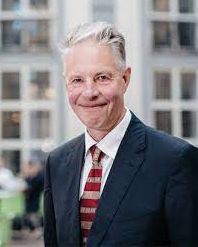
Pieter Winsemius (born 7 March 1942) is a retired Dutch politician of the People’s Party for Freedom and Democracy (VVD) and businessman. Winsemius worked as a researcher at the Leiden University from February 1966 until October 1970 and as a management consultant at the McKinsey & Company from October 1970 until November 1982. After the election of 1982 Winsemius was appointed as Minister of Housing, Spatial

18
Jul
Clinton Edgar Woods

Clinton Edgar Woods (February 7, 1863 – December 19, 1927) was an electrical and mechanical engineer, inventor, manufacturer of automobiles in Chicago and New York City.[1] He was the author of one of the first books on electric vehicles, and an early management author.[2] Biography Woods was born in Belchertown, Massachusetts, where his father was a coachbuilder.[3] “At early age he was left orphan and obligated

18
Jul
Candace A. Yano

Candace A. Yano is Professor and Chair at Haas School of Business’s Operations and Information Technology Management Group, and Professor and former Head of Department of Industrial Engineering & Operations Research, both at University of California, Berkeley.[1] She is also a senior technical consultant on operations management issues for Yano Accountancy Corporation (YAC).[2] Academic work Yano is known for her work in Inventory Theory, Logistics

18
Jul
Udo Zander

Udo Zander (born March 30, 1959) is a Swedish organizational theorist, and Professor in Business Administration at the Stockholm School of Economics until 2012. He is particularly known for his work with Bruce Kogut on knowledge-based theory of the firm.[1][2] Biography Zander obtained his MA in Business Administration from the Stockholm School of Economics in 1986. On a Fulbright Scholarship

18
Jul
Lao Zi

Laozi (/ˈlaʊdzə/, Chinese: 老子), also romanized as Lao Tzu and various other ways, was a semi-legendary ancient Chinese Taoist philosopher, credited with writing the Tao Te Ching. Laozi is a Chinese honorific, generally translated as “the Old Master”. Although modern scholarship generally regards him as a fictional person, traditional accounts say he was born as Li Er in the state of Chu in the 6th century BC during China’s Spring and Autumn Period, served

18
Jul
Zoroaster

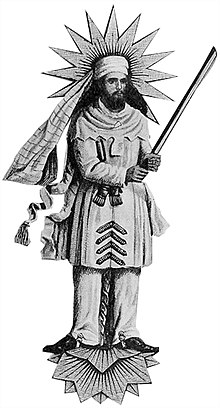
Zoroaster,[a] also known as Zarathustra,[b] is regarded as the spiritual founder of Zoroastrianism. He is said to have been an Iranian-Aryan prophet who founded a religious movement that challenged the existing traditions of ancient Iranian religion, and inaugurated a movement that eventually became a staple religion in ancient Iran. He was a native speaker of Avestan and lived in the eastern part of the Iranian

18
Jul
Decision-making and the execution of organizational decisions

It is clear that the actual physical task of carrying out an organization’s objectives falls to the persons at the lowest level of the administrative hierarchy. The automobile, as a physical object, is built not by the engineer or the executive, but by the mechanic on the assembly line. The fire is extinguished, not by

14
Aug
Choice and behavior of organizations

All behavior involves conscious or unconscious selection of particular actions out of all those which are physically possible to the actor and to those persons over whom he exercises influence and authority. The term “selection” is used here without any implication of a conscious or deliberate process. It refers simply to the fact that,

14
Aug
Value and fact in organizational decision

A great deal of behavior, and particularly the behavior of individuals within administrative organizations, is purposive—oriented toward goals or objectives. This purposiveness brings about an integration in the pattern of behavior, in the absence of which administration would be meaningless; for, if administration consists in “getting things done” by groups of people, purpose provides

14
Aug
Decision-making in the administrative of organizations process

Administrative activity is group activity. Simple situations are familiar where a man plans and executes his own work; but as soon as a task grows to the point where the efforts of several persons are required to accomplish it this is no longer possible, and it becomes necessary to develop processes for the application

14
Aug
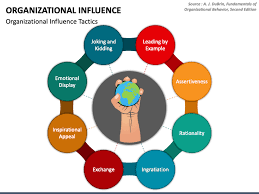
Modes of organizational influence

Decisions reached in the higher ranks of the organization hierarchy will have no effect upon the activities of operative employees unless they are communicated downward. Consideration of the process requires an examination of the ways in which the behavior of the operative employee can be influenced. These influences fall roughly into two categories: (1)

14
Aug
The equilibrium of the organization

The question may next be raised why the individual accepts these organi- zational influences—why he accommodates his behavior to the demands the organization makes upon him. To understand how the behavior of tion, it is necessary to study the relation between the personal motivation of the individual and the objectives toward which the activity

14
Aug
Organization and personality

In recent years, organizations have not had a good press. Large organizations, especially large corporations and Big Government, have been blamed for all manner of social ills, including widespread “alienation” of both workers and executives from their work and from society, with resulting “bureaucracy” and organizational inefficiency. As we shall see later, the empirical

14
Aug
Meaning of the term “organization”

The tendency to downplay organizational factors in executive behavior stems from misunderstanding of the term “organization.” To many persons, an organization is embodied in charts or elaborate manuals of job descriptions and formal procedures. In such charts and manuals the organization takes on more the appearance of a series of orderly cubicles following an

14
Aug
  • 1
  • …
  • 191
  • 192
  • 193
  • 194
  • 195
  • 196
  • 197
  • …
  • 212
List of Great Thinkers
01
Jan
List of Economic Theories and Concepts
24
Feb
List of Social Theories and Concepts
22
Feb
List of Political Theories and Concepts
21
Feb
List of Philosophical Theories and Concepts
22
Feb
Famous books and articles in library
01
Jan
Corporate Management
  • Management Information SystemManagement Information System
  • Human Resource Management and Organizational CultureHuman Resource Management and Organizational Culture
  • Sales Management: Meaning, Objectives, Functions, Scope, Process, Determinants, Tools and Other DetailsSales Management: Meaning, Objectives, Functions, Scope, Process, Determinants, Tools and Other Details
  • Firm Strategy and Strategic ManagementFirm Strategy and Strategic Management
  • Office Management: definition, types, process, jobs and best practicesOffice Management: definition, types, process, jobs and best practices
  • International Business – Meaning, Process, Types & FactorsInternational Business – Meaning, Process, Types & Factors

Methodology & Skills
  • Quantitative research and Statistical software practices (SPSS, Stata, Amos, …)Quantitative research and Statistical software practices (SPSS, Stata, Amos, …)
  • Qualitative Research (interview, case study, observation, action research …)Qualitative Research (interview, case study, observation, action research …)
  • Create your professional WordPress website without codeCreate your professional WordPress website without code
  • Learn Programming Languages (JavaScript, Python, Java, PHP, C, C#, C++, HTML, CSS)Learn Programming Languages (JavaScript, Python, Java, PHP, C, C#, C++, HTML, CSS)
  • How to write a thesisHow to write a thesis
  • How to write and publish a scientific paperHow to write and publish a scientific paper

Connecting and sharing with us

... by your free and real actions.

hotlineTComment and discuss your ideas

Enthusiastic to comment and discuss the articles, videos on our website by sharing your knowledge and experiences.

hỗ trợ hkt Respect the copyright

Updating and sharing our articles and videos with sources from our channel.

hỗ trợ hkt Subscribe and like our articles and videos

Supporting us mentally and with your free and real actions on our channel.

HKT Channel - Science Theories

About HKT CHANNEL
About HKT CONSULTANT

Website Structure

Economic Theories
Social Theories
Political Theories
Great Thinkers
Library

HKT Consultant JSC.

      "Knowledge - Experience - Success"
- Email: Info@hktsoft.net
- Website:
sciencetheory.net

  • Management Theories
    • Industrial Organization
      • Competitive Advantage Theory
      • Contingency Theory
      • Institutional Theory
      • Evolutionary Theory of the Firm
      • Theory of Organizational Ecology
      • Behavioral Theory of the Firm
      • Resource Dependence Theory
      • Invisible Hand Theory
    • Managerial Approaches
      • Agency Theory
      • Decision Theory
      • Theory of Organizational Structure
      • Theory of Organizational Power
      • Property Rights Theory
      • The Visible Hand
    • Hypercompetitive Approaches
      • Resource-Based Theory
      • Organizational Learning Theory
      • Transaction Cost Economics
      • Hypercompetition
      • Systems Theory
  • Economic Theories
  • Social Theories
  • Political Theories
  • Philosophies
  • Theology
  • Art Movements
  • About Us