Skip to content
    • info@hktsoft.net
  • Connecting and sharing with us
  • -
  • About us
    • info@hktsoft.net
HKT ConsultantHKT Consultant
  • Management Theories
    • Industrial Organization
      • Competitive Advantage Theory
      • Contingency Theory
      • Institutional Theory
      • Evolutionary Theory of the Firm
      • Theory of Organizational Ecology
      • Behavioral Theory of the Firm
      • Resource Dependence Theory
      • Invisible Hand Theory
    • Managerial Approaches
      • Agency Theory
      • Decision Theory
      • Theory of Organizational Structure
      • Theory of Organizational Power
      • Property Rights Theory
      • The Visible Hand
    • Hypercompetitive Approaches
      • Resource-Based Theory
      • Organizational Learning Theory
      • Transaction Cost Economics
      • Hypercompetition
      • Systems Theory
  • Economic Theories
  • Social Theories
  • Political Theories
  • Philosophies
  • Theology
  • Art Movements
Penrose and the Theory of Dynamic Capabilities

As noted, and with the benefit of hindsight, Penrose appears to have underplayed growth driven by the entrepreneurial elements of management. She seems to recognize that know-how can be used to convert physical assets to different uses.10 The firm, she said, was “both an administrative organization and a collection of productive resources, both human

31
Aug
Other Growth Issues and the Penrose Effect

We have emphasized Penrose’s contribution to the resource-based theory of the firm. Some of her ideas are consistent with the dynamic capabilities framework; yet until two decades ago when strategy scholars picked up on this work (Teece, 1982), Penrose’s emphasis on fungible resources had not received much attention in either the economics or the

31
Aug
Entrepreneurship, Enterprise Design, and the Role of Markets

As implicitly recognized by Penrose, firms need to be viewed as human organizations, not computer-controlled machines. As such, firms must confront challenges in the realm of organizational design including imperfect incentive alignment, imperfect govern- ance, and bureaucratic decision-making. Organizations facilitate decisions because they constrain the set of alternatives as well as the relevant parameters

31
Aug
Dynamic Capabilities, Resources, and Competitive Advantage: Implications for MNEs

While Penrose may not have fully developed the capability con- cept, the subsequent development of the (dynamic) capabilities approach can be usefully applied to MNEs. Somewhat underre- searched in mainstream MNE theory (at least as far as internal- ization theory is concerned), has been consideration of the import- ance and the particulars of the

31
Aug
The Essence of the MNE and Hymer’s Thesis

Before Hymer, many economists viewed the MNE as simply an arbitrageur of capital, transferring equity capital from countries where returns were low to those where it was higher, earning the arbitrageurs rents and contributing to efficient resource alloca- tion. The capital arbitrage theory of the MNE predicted the MNEs would be headquartered in countries

05
Sep
Hymer and the Emergence of the Internalization School

As noted above, Hymer’s basic argument was that an MNE needed some special advantage to offset the hypothesized higher costs14 (relative to indigenous firms) of operating abroad. Given the indus- trial organization theories advanced at the time (in the Mason- Bain15 tradition) the visceral answer he provided was that special advantages led to market

05
Sep
Dunning’s Eclectic Paradigm

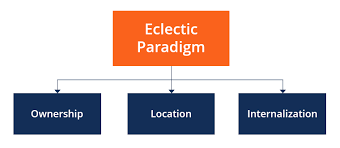
Dunning correctly notes that internalization alone is not sufficient to explain the (productive) activities of MNEs outside their own borders, or the production of foreign-owned firms in the MNE’s home country.20 The author (Teece, 1985) did recognize that MNEs will consider location factors in their decisions with respect to DFI, that is, DFI decisions

05
Sep
Challenges to the Theory of the MNE

1. Changing Nature of International Business In recent decades, increased globalization, and in particular out- sourcing and offshoring, appear to have gained momentum. This can be exemplified by industries from clothing to electronics. As a consequence, international trade in intermediate products has increased, enabled by the global dispersion of knowledge and capa- bilities, as

05
Sep
Injecting the Resources/Capabilities Perspective into the Theory of MNE

1. General The above analysis suggests that while the MNE theory has done quite well in an era of rapid globalization, there is nevertheless the need for a more robust theory of the MNE. As Peter Buckley put it, “the theory of the multinational firm therefore requires development in several directions—the general area of

05
Sep
Dynamic Capabilities, Resources, and Competitive Advantage

The general framework advanced in this book sees difficulty-to- imitate and globally scalable dynamic capabilities (and resources) as foundational to the competitive advantage of multinational enterprises. The greater the diversity and rate of change in business environments, the more critical are dynamic capabilities for the financial performance of the MNE. Some observers have identified

05
Sep
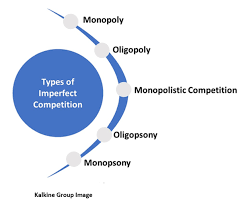
Imperfect Competition and Bargaining Theory

1. Introduction In Sections 6 and 7, efforts were made to explain how notions of enterprise capability can enhance our understanding of MNE. In this section, I wish to ask whether the theory of MNE would suffer if all references to market power and oligopoly theory were purged.57 I conclude that not much would

05
Sep
The Business Enterprise in the Wealth of Nations

We are accustomed to thinking of competitive advantage as resid- ing with nation states. Ricardo argued that it was differences in soil and climate that anchored differences in endowments as between England and Portugal. It was understandable that Ricardo might take this view since firms as we know them today simply did not exist;

05
Sep
Technology and Know-How in the Wealth of Nations

It has long been recognized that economic prosperity rests in some measure upon knowledge and its useful application. Many economic historians have emphasized the role of technology and organization in economic development. Nonetheless, until recently many economic theories have surprisingly underplayed the role of invention, knowledge accumulation, and knowledge transfer in economic development. The

05
Sep
Capturing Value from Knowledge and Competence

The thesis advanced here is that the competitive advantage of firms in today’s global economy stems not from market position, but from the ownership and/or employment of difficult-to-replicate knowledge assets, and the manner in which they are deployed. It is always useful to distinguish between the creation of new knowl- edge and its commercialization.

05
Sep
The Lucana in Economic Growth Theory

Economic growth theory, be it neoclassical or the so-called “new” growth theory, is limited in its ability to explain differences in growth rates amongst nations. Perhaps the primary reason for this is the low appreciation and understanding amongst economists with respect to the role of institutions, management, and gov- ernance. Few would dispute that

05
Sep
The Role of Management in Economic Growth

Invention does not necessarily lead to innovation. In the first century  AD, Heron of Alexandria invented the aelopile, which was arguably a steam engine, since it converted steam into rotary motion; but it was basically a curiosity, and never put to practical use. The Chinese were the world’s technological leaders from about 500 AD to

05
Sep
Dynamic Capabilities in Economic Growth

Is there any way to distill the basic factors that lie behind busi- ness success? The answer, I believe, is in part context driven. Consider therefore competitive economies open to international trade, investment, and technology flows with  legal  structures that allow credible commitments. In such contexts, what are the foundations of business success? Does

05
Sep
The Dynamically Competitive Enterprise and Talented Individuals

1. General The dynamic capabilities framework outlined above and elaborated in Chapter 1 recognizes certain levels of dependence between the organization and the individual. In particular, if the CEO and the management team fail to perform well with respect to sensing, seizing, and then transforming, performance failure at the enter- prise level is likely.

05
Sep
Market Structure and Innovation in Regimes of Rapid Technological Change

Unfortunately, many economists seem to be stuck in a well- traveled and largely irrelevant debate, now half a century old, as to what form of market structure favors innovation, labeling this as the “Schumpeterian” debate. Regrettably, this is all that many have absorbed from the rich work of Schumpeter, the Austrian School, and extensive


05
Sep
Static and Dynamic Competition in Regimes of Rapid Technological Change

As discussed earlier, there is a third (usually overlooked) but very important proposition embedded in Schumpeter: dynamic competition should be favored over its poorer cousin, static compe- tition. I will describe both static and dynamic competition in turn. In doing so, I recognize that these styles of competition sometimes do not have bright lines

05
Sep
  • 1
  • …
  • 207
  • 208
  • 209
  • 210
  • 211
  • 212
List of Great Thinkers
01
Jan
List of Economic Theories and Concepts
24
Feb
List of Social Theories and Concepts
22
Feb
List of Political Theories and Concepts
21
Feb
List of Philosophical Theories and Concepts
22
Feb
Famous books and articles in library
01
Jan
Corporate Management
  • Office Management: definition, types, process, jobs and best practicesOffice Management: definition, types, process, jobs and best practices
  • Entrepreneurship and StartupEntrepreneurship and Startup
  • Management Information SystemManagement Information System
  • Stock market: functioning and investmentsStock market: functioning and investments
  • Retail Management: Definition, Processes, Best PracticesRetail Management: Definition, Processes, Best Practices
  • Sales Management: Meaning, Objectives, Functions, Scope, Process, Determinants, Tools and Other DetailsSales Management: Meaning, Objectives, Functions, Scope, Process, Determinants, Tools and Other Details

Methodology & Skills
  • Qualitative Research (interview, case study, observation, action research …)Qualitative Research (interview, case study, observation, action research …)
  • Research MethodologyResearch Methodology
  • Create your professional WordPress website without codeCreate your professional WordPress website without code
  • Learn Programming Languages (JavaScript, Python, Java, PHP, C, C#, C++, HTML, CSS)Learn Programming Languages (JavaScript, Python, Java, PHP, C, C#, C++, HTML, CSS)
  • How to write a thesisHow to write a thesis
  • How to write and publish a scientific paperHow to write and publish a scientific paper

Connecting and sharing with us

... by your free and real actions.

hotlineTComment and discuss your ideas

Enthusiastic to comment and discuss the articles, videos on our website by sharing your knowledge and experiences.

hỗ trợ hkt Respect the copyright

Updating and sharing our articles and videos with sources from our channel.

hỗ trợ hkt Subscribe and like our articles and videos

Supporting us mentally and with your free and real actions on our channel.

HKT Channel - Science Theories

About HKT CHANNEL
About HKT CONSULTANT

Website Structure

Economic Theories
Social Theories
Political Theories
Great Thinkers
Library

HKT Consultant JSC.

      "Knowledge - Experience - Success"
- Email: Info@hktsoft.net
- Website:
sciencetheory.net

  • Management Theories
    • Industrial Organization
      • Competitive Advantage Theory
      • Contingency Theory
      • Institutional Theory
      • Evolutionary Theory of the Firm
      • Theory of Organizational Ecology
      • Behavioral Theory of the Firm
      • Resource Dependence Theory
      • Invisible Hand Theory
    • Managerial Approaches
      • Agency Theory
      • Decision Theory
      • Theory of Organizational Structure
      • Theory of Organizational Power
      • Property Rights Theory
      • The Visible Hand
    • Hypercompetitive Approaches
      • Resource-Based Theory
      • Organizational Learning Theory
      • Transaction Cost Economics
      • Hypercompetition
      • Systems Theory
  • Economic Theories
  • Social Theories
  • Political Theories
  • Philosophies
  • Theology
  • Art Movements
  • About Us